Free Pattern
Step-by-Step
Crochet
Motifs & SquaresCrochet hexagon motif pattern: a beginner-friendly building block
Learn a simple crochet hexagon motif worked in the round with double crochet. Beginner-friendly, endlessly joinable, and perfect for blankets and patchwork.
Level BeginnerTime 20-30 MinutesYarn Worsted
Pattern highlights
- Chain 6 and close it into a small ring with a slip stitch, keeping the ring relaxed rather than tight.
- Work Round 1 into the center of that ring — chain 3 plus 11 double crochets — then join at the top of your starting chain.
- Double every stitch on Round 2 so the little circle opens up and lies flat.
- Settle into the increase rhythm on Round 3, alternating single stitches with paired ones.
- Watch the six corners emerge as the increases stack in the same positions round after round.
- Keep every join in the top of the starting chain 3 so the seam line stays straight.
- Cut the yarn, weave the tail securely into the wrong side, and check the motif lies flat.
- Repeat for as many motifs as your project needs, then join them with slip stitch or single crochet.
About This Pattern
This pattern gives you one clean, classic crochet hexagon motif worked in the round from a simple chain-6 ring. It is built entirely from chains, double crochets and slip stitches, which means there is nothing exotic to learn before you start. What makes it special is how much it can grow: a single hexagon is a coaster-sized practice piece, but a stack of them becomes a blanket, a cushion cover or a patchwork throw. It is perfect for absolute beginners, for anyone rebuilding confidence, and for crocheters who want a portable, repeatable make.
The techniques here are the foundation of nearly all motif crochet: joining a chain into a ring with a slip stitch, using a chain 3 to stand in for the first double crochet, working stitches into the ring rather than into individual chains, and increasing at a steady rhythm so the flat circle grows evenly. Each round closes with a slip stitch into the top of that starting chain 3. Expect a comfortable beginner level and roughly twenty to thirty minutes for your first motif, less once your hands know the rhythm.
The finished hexagon is flat, firm and satisfyingly geometric, with visible ridges radiating out from the center where the increases stack. The size and weight of the hook and yarn you pick affect your motif's size, so the same three rounds can produce anything from a small doily-like motif to a chunky, cushiony one. The texture feels dense and sturdy rather than lacy, which makes it wonderful for anything that gets handled. As a gift, a set of joined hexagons reads as thoughtful, handmade and quietly impressive.
Variations
The easiest change is color, and this motif is built for it. Try a dark center with two lighter rounds around it so the hexagon reads like a flower — charcoal, dusty rose, blush is a favorite of mine. Or flip it: cream in the middle, then deep teal, then mustard for a retro feel. If you want a scrappy blanket, keep the final round the same color across every hexagon and let the inner rounds be whatever leftovers you have; that shared outer round is what makes a wild mix look deliberate rather than chaotic. Size is your next lever. Because each round follows a predictable increase rhythm, you can simply stop after Round 2 for a tiny motif, or keep the established pattern going for extra rounds to make one large hexagon big enough to be a placemat or cushion front. Yarn choice changes the personality completely. Cotton gives you crisp, defined edges and a firm hand — ideal for coasters, potholders and market bag panels. A soft acrylic or wool blend in worsted weight makes a squishier, drapier motif for blankets. Go up to a chunky yarn with a larger hook and a single hexagon becomes a floor-cushion panel in minutes. You can also change the join: slip stitch joining gives a flat, almost invisible seam, while single crochet joining leaves a raised ridge that becomes a design line running across the whole piece. Try both on scrap motifs before committing to a big project.
I keep coming back to this hexagon because it is honest crochet — no gimmicks, just a chain-6 ring and three rounds of double crochet doing exactly what they promise. There is a specific little moment I love: after Round 1, when you have eleven double crochets plus your chain 3 packed into that tiny ring and you pull the slip stitch closed, the whole thing suddenly snaps into a neat circle. It never gets old. Then Round 2 doubles everything, Round 3 settles into that one-then-two rhythm, and you can feel the shape deciding to become a hexagon under your fingers. I find the increase rhythm genuinely meditative — you stop counting consciously and just follow the ridges. It is also the most forgiving project I know for practicing tension, because a hexagon tells you the truth immediately: too tight and it cups, too loose and it ruffles. And the payoff is huge for the effort. One motif is a coaster. Thirty is a blanket. That ratio is why this pattern lives permanently in my project bag.
Common mistakes
- Forgetting that the chain 3
- Treat that chain 3 as a real stitch from the moment you make it. In Round 1 it is one of your twelve stitches, so you only work 11 more double crochets into the ring. In Rounds 2 and 3, the chain 3 plus the double crochet you add in the same space together form your first increase pair.
- Joining each round into the wrong place
- Before you slip stitch, find the little V at the very top of the chain 3 and put your hook under both loops of it. Joining consistently in that exact spot is what keeps the seam line straight and stops the motif from spiraling out of shape.
- Working the chain-6 ring so tightly
- Keep the ring relaxed enough to slide your hook and yarn through comfortably while you work all twelve stitches into it. If a hole still shows once the motif is done, thread the tail through the center stitches with your tapestry needle and gently snug it closed before weaving in.
- Losing track of where a round begins
- Place a stitch marker in the top of the chain 3 as soon as you make it, and move it up at the start of every round. A row counter helps too — this motif is only three rounds, but one miscounted increase changes the whole shape.
- Getting the Round 3 rhythm wrong
- Say the rhythm out loud as you go — one, then two, one, then two. The single double crochet always sits between increases, and the pairs are what push the corners outward. If your motif starts looking round instead of angular, your increases have drifted.
- Cutting the yarn short at the end
- Leave a tail of at least six inches before you cut. Thread it on the tapestry needle and weave it back and forth through several stitches on the wrong side, changing direction at least once so it locks and will not pop out with use.

Beginner
Progress Tracker
0 of 0 rounds
Tap a round to tick it off — your place is saved on this device.
Materials
- Yarn — pick a yarn that fits your project and skill level
- Crochet hook — pick a hook size that fits your yarn and project
- Scissors
- Tapestry needle
- Stitch marker
- Row counter
Main Pattern
Before you start Start by picking your crochet hook and yarn. The size and weight of the hook and yarn you pick affect your motif's size.
Foundation ring Chain 6. Then connect the ends with a slip stitch to make a ring.
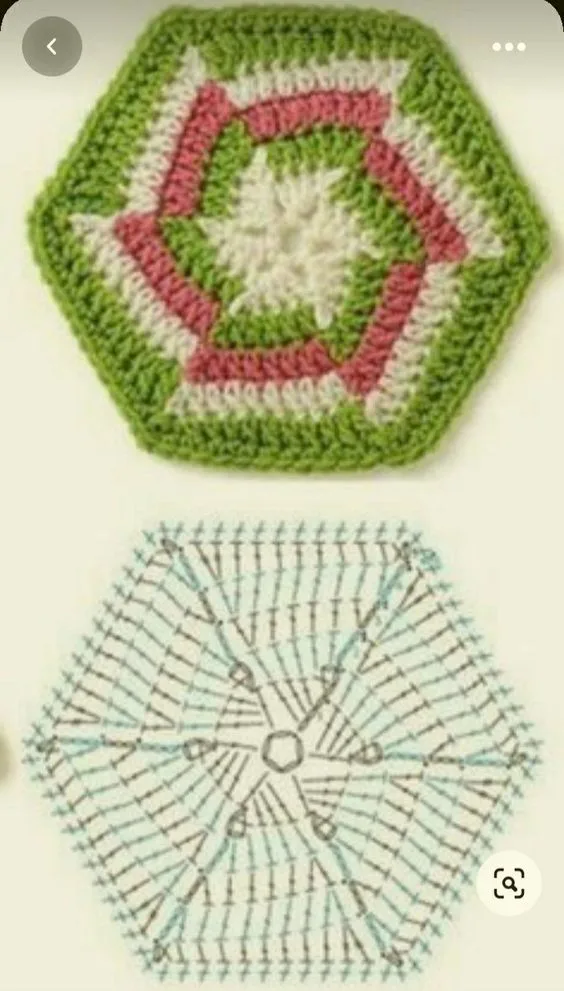
- Round 1Chain 3 (this is your first double crochet), then do 11 double crochets in the ring. Join them with a slip stitch at the top of the starting chain 3.
- Round 2Chain 3 (your first double crochet), do another double crochet in the same space. Add 2 double crochets in each stitch around. Join with a slip stitch at the top of the first chain 3.
- Round 3Chain 3 (first double crochet), do a double crochet in the same space. Do 1 double crochet in the next, then 2 double crochets in the next. Repeat around, joining with a slip stitch at the top of the first chain 3.
Finishing Cut off the yarn and hide the loose ends to finish your hexagon.
Assembly
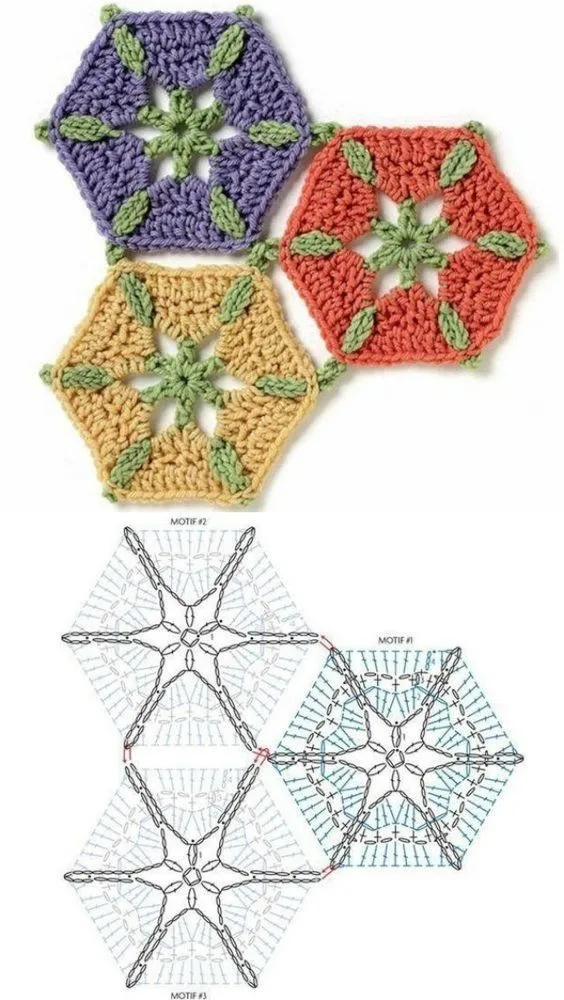
- Step 1Once you know how to make a hexagon, you can connect many of them to make bigger pieces like blankets or patchworks.
- Step 2There are different ways to join hexagons, such as slip stitch and single crochet. Try a few to see what you like best for your work.
Important notes
This pattern uses US crochet terms throughout, so a double crochet here is the taller stitch made with one yarn over. If you normally follow UK terminology, read every dc as a UK treble before you begin.
The finished size is entirely determined by your hook and yarn choice — the pattern does not lock you into one measurement. If you are making many hexagons for one project, use the same yarn and hook for all of them so they join without puckering.
Make one test hexagon before you commit to a full set. Lay it flat and check that it sits without cupping or ruffling; if it cups, go up a hook size, and if it ruffles, go down one.
Each round is joined and closed rather than worked as a continuous spiral, which means you will see a faint seam line running from the center to the edge. That line is normal and becomes invisible once motifs are joined together.
Keep a stitch marker in the top of your starting chain 3 at all times. It costs nothing and it is the single easiest way to avoid the miscounts that make a hexagon go crooked.
Weave in ends as you finish each motif rather than saving them all for the end. A pile of thirty hexagons with thirty loose tails is a genuinely miserable afternoon, and secured ends also let you block and measure accurately as you go.
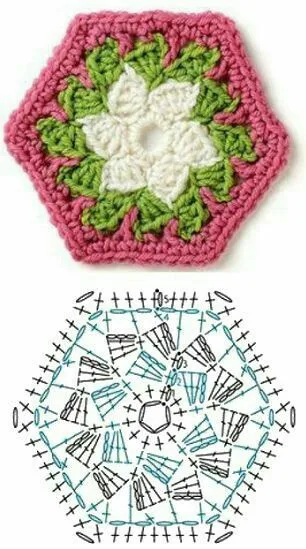
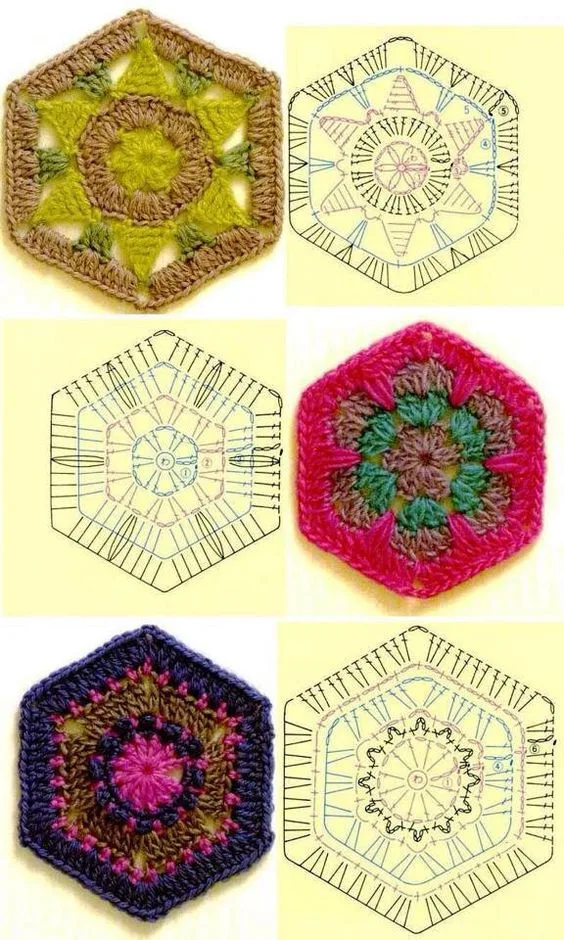
Many hexagon crochet patterns use crochet symbols and charts; learn the symbols so you can follow the pattern easily.
Practice the basic hexagon motif until you're confident before moving on to larger projects, and don't be afraid to ask other crocheters for help.
More photos
FAQ
Why is my hexagon coming out round instead of six-sided?
That almost always means the increases are spread too evenly instead of stacking in the same places round after round. The corners of a hexagon form where increases pile up on top of each other, so if your pairs drift by a stitch each round, the shape softens into a circle. Use a stitch marker at the start of each round and follow the one-then-two rhythm exactly.
What yarn and hook should I use?
Any weight works — pick a yarn and hook size that fit your project and your skill level, and the motif simply comes out larger or smaller to match. A worsted weight yarn with a hook that matches the yarn band is the easiest starting point for a first hexagon. Cotton gives crisper edges, while acrylic or a wool blend gives a softer, squishier result.
How many hexagons do I need for a blanket?
It depends entirely on how big each motif turns out in your chosen yarn and hook, so make one first and measure it. Divide your target blanket width and length by that measurement to get a rough count, then add a few extra for the half-spaces along the edges. Most people find it easiest to make a manageable batch, lay them out, and keep going until the layout looks right.
What is the best way to join the hexagons together?
There are different ways to join hexagons, such as slip stitch and single crochet. Slip stitch joining creates a flat, subtle seam that keeps the surface smooth, which suits blankets and anything you want to feel soft. Single crochet joining leaves a raised ridge that becomes a visible design line across the whole piece. Try a few on spare motifs to see what you like best for your work.
Can I make the hexagon bigger than three rounds?
Yes, and it is one of the best things about this motif. Keep following the same increase logic outward, adding one more plain double crochet between each increase pair on every new round. The hexagon will keep growing evenly, so you can size it up to a placemat, a cushion front, or even a single-motif blanket.