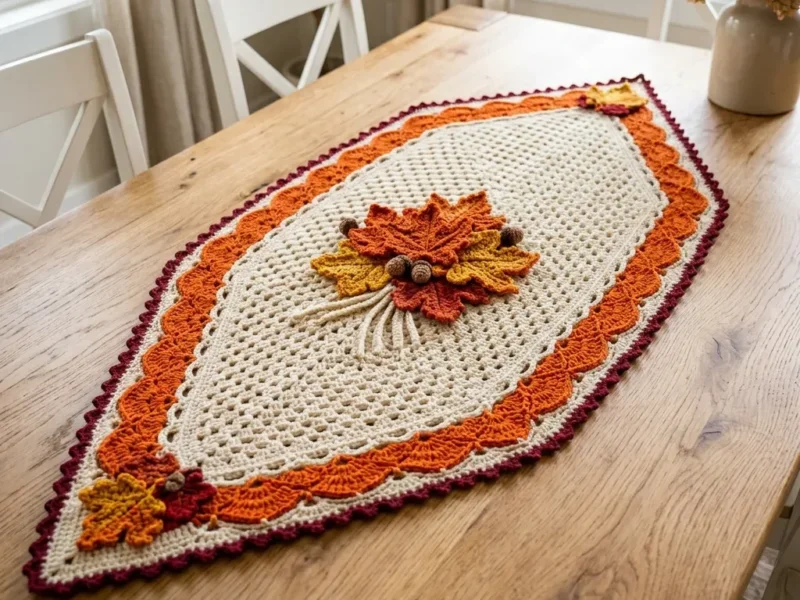
Free Pattern
Step-by-Step
Crochet
Home Decor30×30 Grid Crochet Pattern for a Pixel Art Panel
A counted single crochet grid builds a pixel art panel in four yarn colors.
- Level
- Intermediate
- Time
- 4-6 hours
- Hook
- 5 mm
- Yarn
- Worsted
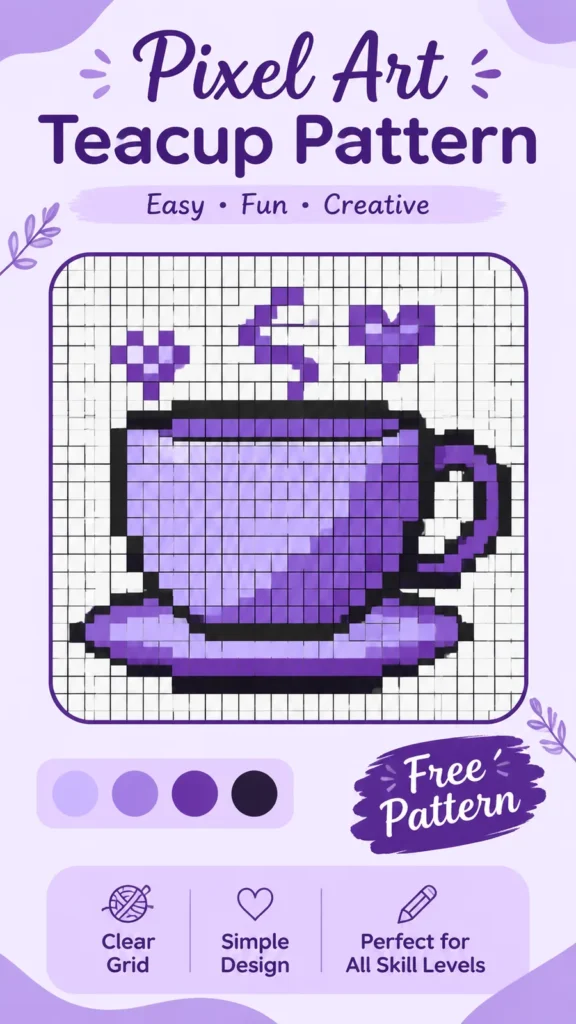
Pattern highlights
- Chain enough stitches to start the grid, then work single crochet across following the color chart row by row.
- Change yarn colors mid-stitch as the chart calls for them, carrying unused colors loosely inside the work.
- Keep working flat rows until the pixel shape and diagonal color movement are complete across the panel.
- Work a second round the same way, then join and fasten off to lock the border in place.
- Weave in every yarn tail securely before blocking the panel flat to straighten the pixel edges.
About This Pattern
A 30x30 grid panel like this one sits somewhere between a swatch and a statement piece. It's the kind of project collectors of graphghan squares keep filed under 'someday.' The scale is modest, but the payoff is a crisp little pixel composition. I like that it reads as one complete motif rather than a repeat — a single shape, no commitment to a whole blanket unless I decide to add more.
The technique doing the real work here is tapestry crochet, worked in single crochet so each stitch stands for one pixel. Rows build the central shape flat, with color changes landing mid-stitch to keep the handoff clean. Medium weight yarn and an H-8 hook keep the grid legible without the fabric going stiff. Nothing fancy — just counting, carrying yarn, and trusting the chart.
What comes off the hook is a flat square panel, framed afterward with two rounds of single crochet and corner increases. That border squares up the edges and gives the piece a clean finish before it becomes anything else. Cushion front, wall panel, tote applique — the panel itself doesn't care which job it gets next.
Worth knowing
The satisfaction here is in the counting. Thirty rows, and a chart that tells you exactly where lavender hands off to dark purple. Tapestry crochet rewards patience — carrying yarn through stitches so the back stays tidy and the front stays crisp. I like watching the diagonal color movement emerge a row at a time, the way a photograph develops in a tray. The border rounds are a small relief after all that concentration, since no counting changes mid-row. Finishing with corner increases at each turn squares the panel without any extra math. For a project this size, clean color changes are the real skill-builder — get those right, and the piece reads as intentional pixel art instead of a smudge.
Common mistakes
- Pulling carried yarn too tight Tension on carried strands should stay relaxed, or the fabric puckers and curls at the edges. Check the back of the work periodically while stitching.
- Losing track of the row count Thirty rows of single crochet can blur together without a tally. Mark every tenth row or keep a written tick sheet nearby.
- Skipping the corner increases Forgetting the extra stitches at each corner leaves the border rippling instead of flat. Place the increase stitches in each corner on both rounds.
- Carrying yarn across long floats Letting a carried color skip several stitches creates loose floats on the back. Catch the carried yarn every stitch or two so tension stays even.

Intermediate
Progress Tracker
0 of 0 rounds
Tap a round to tick it off — your place is saved on this device.
The kit
- Medium weight yarn in lavender, purple, dark purple, and black or charcoal
- 5 mm (US H-8) crochet hook
- Yarn needle for weaving ends
- Scissors
- Stitch markers if desired for counting rows
Main Pattern
Round 1Sc in second ch from hook and across. Turn. (30 sc)
Round 230 Work 30 sc across each row, following the color placement guide below. Turn after each row except the final row.
Main Pattern
Round 1Attach lavender yarn at any corner. Ch 1, sc evenly around the entire panel, placing 3 sc in each corner. Join with a sl st to the first sc.
Round 2Ch 1, sc around, placing 3 sc in each corner stitch. Join with a sl st. Fasten off and weave in all ends securely.
Special Technique: Tapestry Color Change
Carry unused yarn colors inside your stitches. When changing colors, work the final yarn over of the previous stitch with the new color. Keep carried yarn relaxed so the fabric does not pull or curl.
Color Guide
Rows 2-6: Lavender background.
Rows 7-10: Begin purple diagonal shape by changing selected center stitches to purple.
Rows 11-18: Continue expanding the purple diagonal section while keeping lavender background stitches.
Rows 19-23: Narrow the diagonal section and add dark purple accent stitches.
Rows 24-30: Return mostly to lavender with small purple accent areas. For a true 30×30 grid appearance, each row should contain exactly 30 stitches. Use graph paper to mark each color square before crocheting if you want to create additional versions.
Assembly
Step 1Handmade crochet panels look their best after careful finishing. Secure all yarn tails by weaving them through several stitches on the back side. Blocking helps straighten edges and improves the appearance of the pixel design.
Step 2For long-lasting results, wash according to the yarn label instructions. Gentle washing and air drying are usually best for handmade crochet decor.
Finishing
- Weave every yarn tail through several stitches on the wrong side before trimming.
- Block the panel flat, pinning the edges square so the pixel grid sits straight.
- Wash according to the yarn label once finished, then air dry flat to hold the shape.
Why it works
The central grid is worked flat, row by row, which keeps the pixel chart easy to follow without tracking a spiral.
Color changes fall inside the stitch rather than between rows, so each pixel keeps a clean, square edge.
The border rounds place extra stitches in each corner, which is what turns a flat-sided square into a border without puckering.
What it becomes
- A cushion front: this panel pairs well with a plain charcoal or lavender back fabric.
- Framed wall art: mount the panel on canvas or a hoop alongside other geometric crochet squares.
- A tote bag panel: stitch it to the front of a solid-color canvas tote for a graphic focal point.
Original pattern: https://duniarecipe.com/30x30-grid-crochet-patterns-for-pixel-art-and-easy-crochet-designs/
FAQ
Can I make this panel bigger?
Yes. Increase the starting chain by multiples of 30 and add rows while keeping the grid proportions the same. The source notes this as the simplest way to scale up.
What yarn weight works best?
Medium weight yarn with an H-8 hook keeps the grid crisp and the fabric flexible. Cotton gives a smoother, more decorative finish if you want a flatter surface.
Why use tapestry crochet instead of changing colors row by row?
Tapestry crochet lets multiple colors live in the same row, which is what makes a true pixel grid possible. Simple row-by-row color changes could not create the diagonal movement in this design.
Do I need stitch markers?
They're optional, but helpful. Thirty rows of single crochet are easy to miscount, and a marker every few rows keeps the chart aligned.