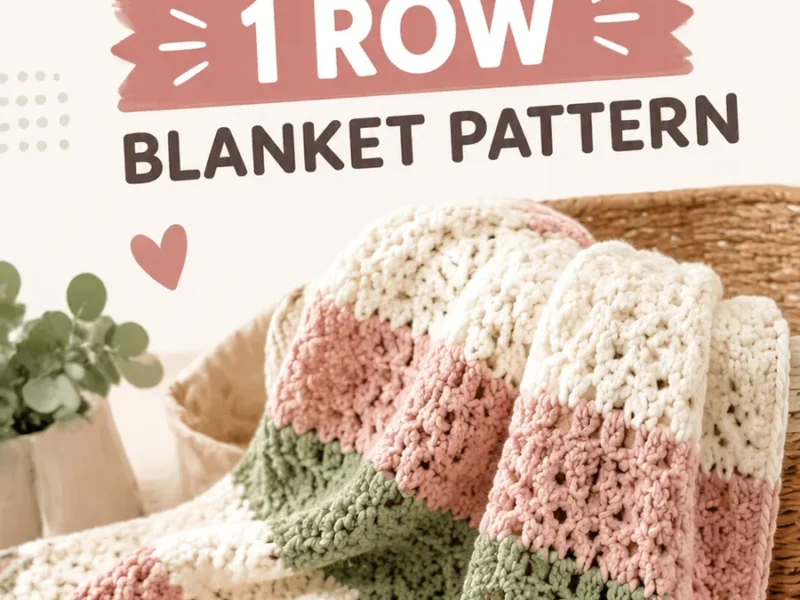
Free Pattern
Step-by-Step
Crochet
Blankets & ThrowsCat stitch crochet pattern for a textured blanket
A shell-stitch cat pattern worked flat in rows, with color changes every three rows.
- Level
- Intermediate
- Time
- 4-6 hours
- Hook
- 4 mm
- Yarn
- Worsted
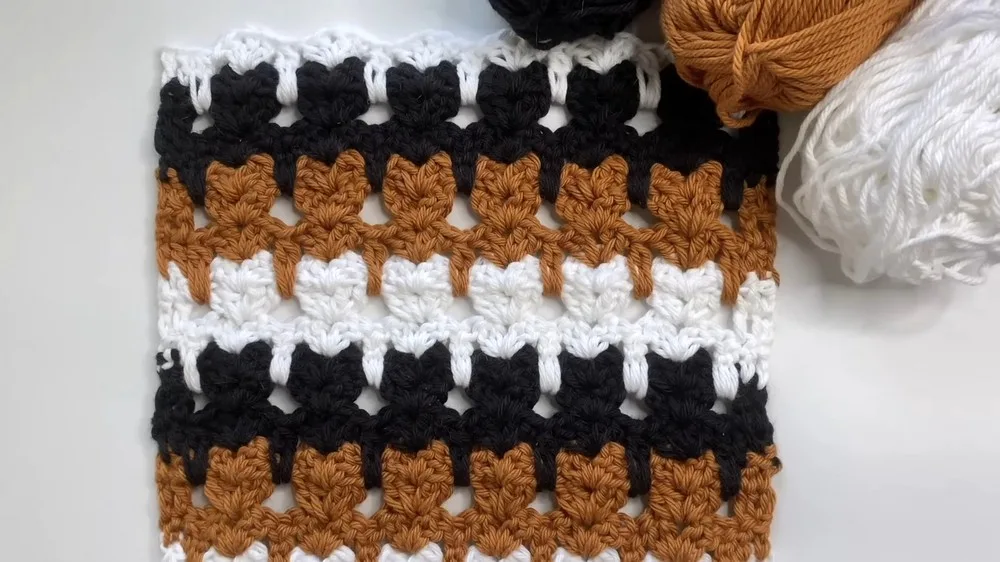
Pattern highlights
- Lay a foundation row of shells by skipping four chains and packing a shell into the next one.
- Turn with a chain at the start of each row, then double crochet into the next stitch.
- Work a new shell into the chain-1 space left by every shell from the row before.
- Keep repeating that shell-into-space move across each row until you reach the far edge.
- Change yarn color on the schedule set out in the assembly steps, every few rows.
- Keep repeating the core rows until the piece reaches the length you want.
- Finish on the specified row so the last line of shells matches the first.
About This Pattern
This one lives in the shell-stitch drawer of my collection, next to the shawls and the granny ripples. The cat stitch name is new to me, but the bones of it aren't: a fan shape repeated across a row, offset so the next row's fans nest into the gaps. It's the kind of pattern I keep coming back to when I want texture without a chart that fights me.
The whole thing rides on one move: skip four chains, then pack a shell into the fifth. Everything after that first row is about finding the chain-1 space left by the shell before and filling it again. There's a turning chain at the start of every row, and color changes drop in on a schedule rather than whenever I feel like it.
Worked flat start to finish, this grows into a striped, scalloped panel rather than a single motif. Cotton gives the shells enough body to hold their shape instead of flopping. I'd call the result a throw or a lap blanket, something with a rhythm you can see from across the room.
Worth knowing
I like a pattern that teaches me its own logic in one row and then just asks me to keep believing it. The shell stitch here, two dc, chain 1, two dc, is simple enough to memorize by row three, but the skip-four rhythm keeps my eyes on the chain space instead of counting stitches one by one. Working it flat means no seams to hide and no round markers to lose. The color changes every three rows turn a single repeat into something that reads as deliberate striping, not just leftover yarn used up. It's satisfying in the way a metronome is satisfying. Steady, a little hypnotic, and done before I expected.
Common mistakes
- Losing the skip-four count Mark every fifth chain before you start the foundation row. It saves you from ripping out a lopsided first row.
- Missing the chain-1 space Spread the previous row's shell open with a finger before working into it. The space is smaller than it looks.
- Color changes on the wrong row Count rows as you go rather than guessing by eye. The shell pattern makes rows easy to miscount.
- Edges drifting narrower over rows Check that the last shells and end double crochets line up with the row before. Pull back a row if the edge is creeping in.
Intermediate
Progress Tracker
0 of 0 rounds
Tap a round to tick it off — your place is saved on this device.
The kit
- Worsted weight (size 4) cotton yarn
- 4mm crochet hook
Main Pattern
Work a foundation chain in multiples of 5 (e.g., 5, 10, 15, 20...) to your desired width. Begin with a chain of 30 for this example.
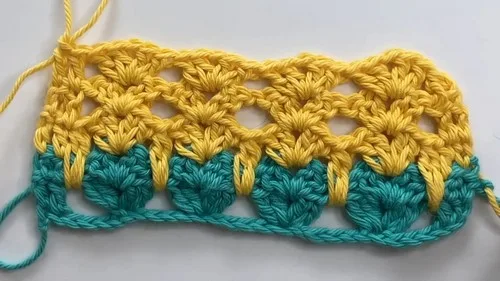
Round 1Double crochet (dc) into the fourth chain from the hook (counts as two dc). Skip four chains, then work a shell stitch into the fifth chain: Shell stitch: 2 dc, chain 1, 2 dc in the same stitch.Continue the pattern across, skipping four chains and applying a shell stitch in the fifth chain.When you have six chains left at the end of the row, double crochet into the last two chains.
Round 2Chain 2 (or 3) to serve as your first dc, and turn your work. Double crochet into the next stitch.Work a shell stitch into each chain-1 space of the previous shell stitches across the row.Dc in the final two stitches and once into the chain-space or top of the turning chain.
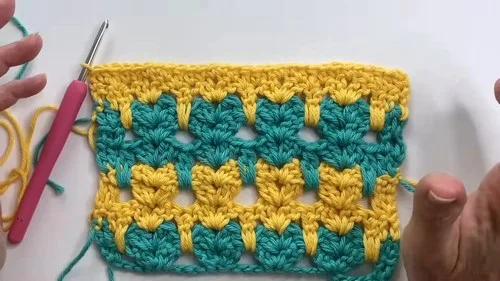
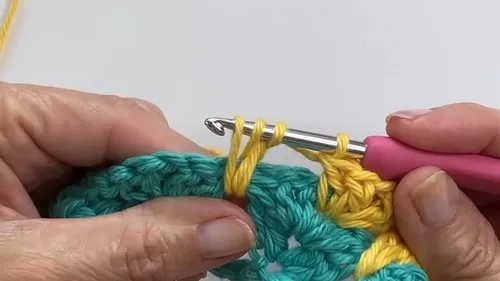
Round 3Change color at the end of Row 2. Chain 2 (or 3) or do a stacked single crochet for the first dc, turn your work.Perform an extended dc decrease (extended two double crochets together) down into the first row to create the "paws":Yarn over, insert the hook down to the first row, pull up a loop to current row height, yarn over and pull through two loops twice.Shell stitch in the chain-1 space from the previous row's shell stitch.Alternate with the extended dc decreases and shell stitches across the row.End with a dc in the final two stitches.
Round 4Chain 2 (or 3), or do a stacked single crochet, and turn your work. Shell stitch in the chain-1 space of each shell stitch from the previous row across.
Round 5Repeat instructions for Row 4.
Border (Optional)Work a single crochet edge around the project, placing three sc in each corner. For wavy sides, alternate single crochet (sc), half double crochet (hdc), and double crochet (dc) to create a smooth edge.
Assembly
Step 1Repeat Rows 3 through 5 until your project reaches the desired length, changing colors every three rows.
Step 2To complete the project, end on a repeat of Row 3.
From the collection
Finishing
- Weave in every end left by a color change, since those add up fast with stripes every few rows.
- Block the finished panel to open up the shells and square off the edges.
- Check the final row against the first for a tidy, even last line of shells before calling it done.
Why it works
The foundation row sets the spacing for the entire piece: skip four chains, shell in the fifth, so every later row has to match that same rhythm.
Shells after the first row land in the chain-1 space of the previous shell, which is what offsets each row and builds the fan texture.
The whole thing is worked flat with a turning chain at the start of every row, since a shell pattern this wide doesn't lend itself to joined rounds.
What it becomes
- A lap blanket for the couch, paired with solid-color pillows so the shell texture stands out.
- A nursery blanket in soft cotton, laid over a wooden crib rail or folded on a shelf.
- A table runner or long throw for a reading nook, set against plain linen or a wicker basket.
Original pattern: https://crocheteverything.com/fun-easy-crochet-cat-stitch-pattern/
FAQ
Does it matter if I chain 2 or chain 3 to turn?
Either works as your first double crochet, but pick one and keep it consistent for every row. Mixing the two changes your edge height row to row.
Why skip four chains before the first shell?
That gap is what gives the shell room to fan out without crowding the next one. It also sets the spacing every later row has to follow.
How do I know I'm hitting the right spot for each shell?
You're aiming for the chain-1 space inside the previous row's shell, not the stitches around it. If the shell sits crooked, you probably missed that space.
What happens if I don't end on the specified row?
The last line of shells won't mirror the first, and the piece looks unfinished at that edge. Stopping on the right row keeps both ends matching.