Free Pattern
Step-by-Step
Crochet
Cowls & NeckwearChunky Lace Cowl With a Scottish-Inspired Rhythm
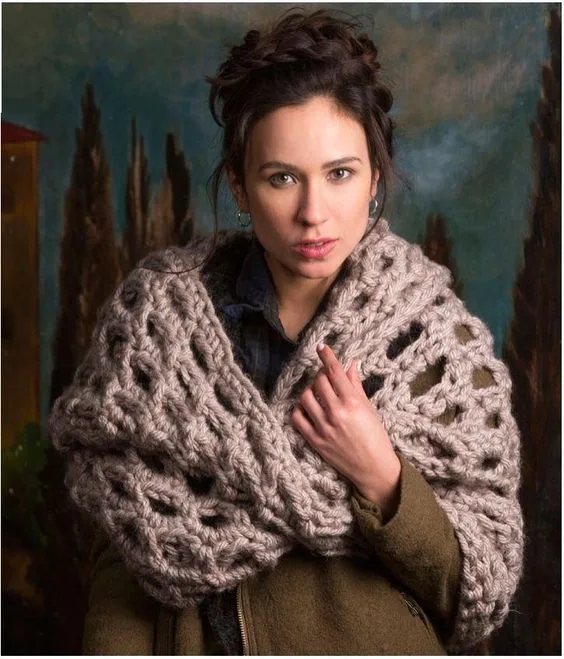
A repeating lace round builds this cozy crochet cowl into a warm, textured winter loop.
- Level
- Intermediate
- Time
- 4-6 hours
- Yarn
- Worsted
Pattern highlights
- Chain a long foundation and join it into a simple single crochet base round first.
- Work a lace round that alternates single crochets with small chain spaces around the loop.
- Fill each chain space with a cluster of single crochets on the very next round.
- Keep alternating those two rounds so the shell pattern builds up in layers.
- Slip stitch the join at the start of every round to keep the tube seamless.
- Repeat the two-round sequence until the cowl reaches the depth shown in the pattern.
- Fasten off once the final repeat is complete and the loop feels dense enough to wear.
About This Pattern
Every collector's notebook needs a good cowl page, and this one earns its spot. I file it under pieces that look complicated but aren't. It's the kind of project I hand to someone who wants texture without a chart to memorize.
The whole thing runs on two rounds traded back and forth: a chain-space lace round, then a shell round that fills those spaces with three stitches each. That alternation is the entire trick. Repeat it enough times and a plain tube turns into something with real depth.
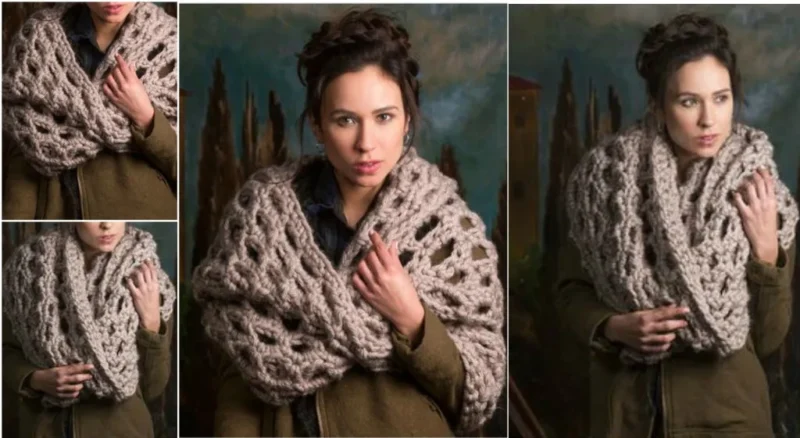
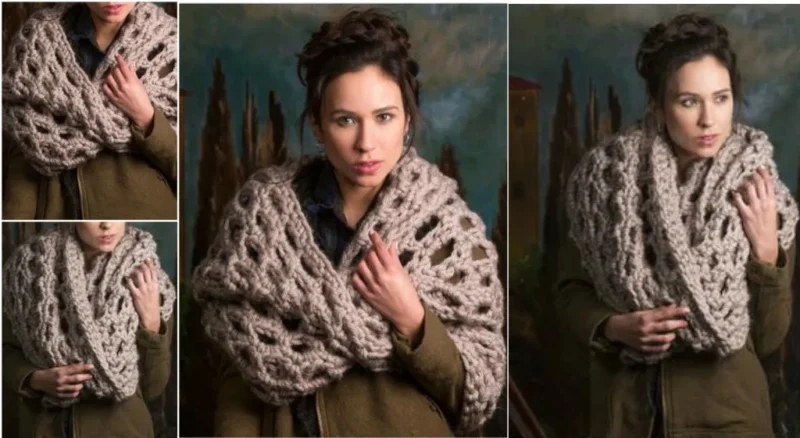
What comes off the hook is a seamless loop, joined round after round with no shaping. It sits soft and a little slouchy around the neck. I'd call it a weekend project, not a weeknight one — it takes patience, not skill.
Worth knowing
I like a pattern that teaches its whole vocabulary in the first three rounds and then just asks you to keep speaking it. Here, the chain-3 lace round and the shell round do that. Once you've worked Round 2 and Round 3 once, you've worked the whole cowl — it just repeats twelve more times. That repetition is where the satisfaction lives: the fabric thickens, the shells stack into a subtle diamond rhythm, and there's no counting stitch-by-stitch after the setup. It's meditative work. And because every round joins with a slip stitch, there's no seam to hide at the end, which always feels like a small mercy.
Common mistakes
- Miscounting the skipped stitches In Round 2, skip exactly two single crochets between each chain-3 space. Recount if the stitch total drifts from 20 sc and 20 spaces.
- Losing track of the join Mark the first stitch of each round with a scrap of yarn or a stitch marker. It keeps the slip-stitch join from wandering.
- Cramming the shell stitches Work all three single crochets into the chain-3 space, not into the chain stitches themselves. This keeps the fabric's texture even.
- Twisting the foundation chain Check the chain lies flat before joining Round 1. A twist here carries through every round after it.
- Losing the rhythm mid-repeat Since Rounds 2 and 3 alternate for twelve repeats, jot a tally after each pair. It saves frogging a whole round later.
Intermediate
Progress Tracker
0 of 0 rounds
Tap a round to tick it off — your place is saved on this device.
The kit
- Worsted weight yarn (wool or alpaca recommended for a warm, traditional, rustic look)
- Crochet hook (size to suit your yarn)
Crochet Back to Scotland Cowl
Foundation Ch 61.
Round 1Right side Sc in 2nd ch from hook and in each ch across; join with slip st in first sc—60 sc.
Round 2Ch 1, sc in first sc, *ch 3, skip next 2 sc, sc in next sc; repeat from * around, ch 3, skip last 2 sc; join with slip st in first sc— 20 sc and 20 ch-3 spaces.
Round 3Slip st in first ch-3 space, ch 1, 3 sc in same space and in each ch-3 space around; join with slip st in first sc—60 sc.
Rounds 4–27Repeat Rounds 2 and 3 twelve times.Fasten off.Weave in ends.Adding multiple colors or even tartan-inspired patterns enhances the Scottish feel. Advanced stitch patterns like cables may be more challenging.
Learn how to crochet a traditional Scottish cowl. Explore patterns, styles, and tips to craft a piece that celebrates Scotland's rich heritage and cozy warmth.
Wool or alpaca yarn is ideal, as they’re warm and give a traditional, rustic look.
From the collection
Finishing
- Weave in the starting and fastening-off tails along the inside of the tube where they won't show.
- Steam or lightly block the finished loop flat to even out the shell rounds before wearing.
- Give the join line a final check to make sure the slip stitches sit flush and unnoticed.
Why it works
Round 1 is worked flat across a chain, then joined — that join is what turns a strip into a tube from the start.
Rounds 2 and 3 alternate a chain-space round with a shell round, so stitch count shifts between 20 sc and 60 sc by design, not by shaping.
There's no increase or decrease anywhere in the repeat; the cowl's width comes purely from stacking the same two rounds twelve times.
What it becomes
- Loop it over a wool coat for a walk on a cold morning — it fills the gap a scarf usually leaves.
- Layer it with a chunky knit sweater for extra warmth without adding bulk at the wrists.
- Pair it with a leather jacket for a textured, rustic contrast against smooth material.
Original pattern: https://crochetblog.net/crochet-back-scotland-cowl/
FAQ
Can I make the cowl shorter than the pattern suggests?
Yes — just work fewer repeats of Rounds 2 and 3. Stop once the depth suits you, then fasten off on a completed shell round.
Why does the stitch count change between rounds?
The lace round condenses stitches into chain spaces, dropping the count to 20 sc and 20 spaces. The shell round expands it back to 60 sc by filling each space.
Is this a good pattern for a beginner?
It's approachable once the two-round repeat clicks, though I'd call it intermediate. The single crochet and chain-space work are simple, but tracking twelve repeats takes patience.
Does the cowl have a visible seam?
No. Every round joins with a slip stitch in the round, so the tube stays seamless all the way through.